





Quick answer: How do you exfoliate skin naturally at home?
Choose a gentle exfoliant or soft exfoliating tool suited to your skin, how you use it matters just as much as the ingredients. Look for options without microplastics, synthetic fragrance or harsh surfactants, and consider a finely milled oat or rice powder exfoliant if your skin is sensitive. Massage lightly, rinse with lukewarm water and moisturise afterwards. Exfoliation removes dead skin cells, but too much can cause irritation, so adjust the frequency to your skin’s response and avoid broken, irritated or sunburned skin.
First written in September 2022. Updated in September 2026.
One of the key steps to radiant, healthy skin is regular exfoliation to remove dry, dead skin cells. The problem with many store-bought scrubs is that they can contain things like plastic microbeads, palm oil-derived ingredients, sodium lauryl sulphate, and synthetic colours, fragrances, and preservatives - ingredients that are no good to anyone or the environment.
That’s why we always come back to something simpler: exfoliating with natural ingredients, and where you can, using natural exfoliating tools as well. When done gently and thoughtfully, it’s one of the easiest ways to bring your skin back to life.
In this guide, we’ll walk through how to exfoliate without damaging your skin barrier, which ingredients to choose for your skin type, and what to avoid if your skin tends to react.
How does exfoliating help your skin?
As new skin cells are created in the dermis (the skin's inner layer), old, dead skin cells are pushed towards the epidermis (the outer layer). Eventually, these dead cells flake away on their own.
However, as we age, this process slows down. The build-up of dead skin can leave your complexion looking dull, rough and dry. It can also contribute to clogged pores, excess oil and breakouts, blackheads, and uneven skin texture.
Exfoliating helps to gently remove this build-up, revealing fresher skin underneath. It also allows your moisturiser to penetrate more deeply, making it far more effective.
Where things go wrong is when exfoliation becomes too frequent or too harsh. This can disrupt the skin barrier, leading to tightness, redness, sensitivity and even more breakouts.
A good rule of thumb: your skin should feel soft and comfortable afterwards — not tight and stripped bare.
Which ingredients are best to avoid in exfoliators?
You may be searching for natural exfoliation options after realising your skin isn’t tolerating conventional products well. Some of the most common triggers include:
- Plastic microbeads, which are not only unnecessary but contribute to ocean pollution.
- Synthetic fragrance, often linked to irritation, headaches or skin flare-ups.
- Harsh surfactants like SLS that can strip the skin.
- Artificial preservatives and colours that add little benefit to your skin.
How do you exfoliate skin properly at home?
Before diving into ingredients, it helps to get the method right.
1. Choose an exfoliator suited to your skin
Some ingredients help unclog oily skin, while others soothe and support sensitive or dry skin. The gentler your skin, the more you may benefit from softer exfoliants — or even non-scrub options like clay.
Explore all our Facial Exfoliants
2. How to exfoliate skin without a scrub: choosing your tools
Alongside ingredients, the tools you use can shape how your skin responds to exfoliation.
| Exfoliation tool | Best for | Exfoliation level | How it works | When to use |
|---|---|---|---|---|
| Konjac sponge | Sensitive skin, face, reactive skin | Very gentle | Soft plant fibres provide light, low-friction exfoliation while cleansing | Daily or a few times a week |
| Muslin / face cloth | Face, sensitive or everyday exfoliation | Very gentle | Soft fabric lightly exfoliates as it removes cleanser and loosened dead skin | Daily or as part of cleansing routine |
| Facial brush (soft bristle) | Face, gentle controlled exfoliation | Gentle | Fine bristles lift dead skin cells while supporting circulation during cleansing | 1–3 times per week |
| Natural loofah | Body, general exfoliation | Gentle to moderate | Fibrous plant texture lifts dead skin cells during washing | 2–3 times per week |
| Dry skin, rough areas (arms, legs) | Moderate | Textured fibres provide deeper exfoliation for built-up dry skin | 1–2 times per week | |
| Dry body brush | Dry or flaky skin, pre-shower routine | Gentle to moderate | Brushing on dry skin removes dead cells and stimulates circulation | Before showering, a few times a week |
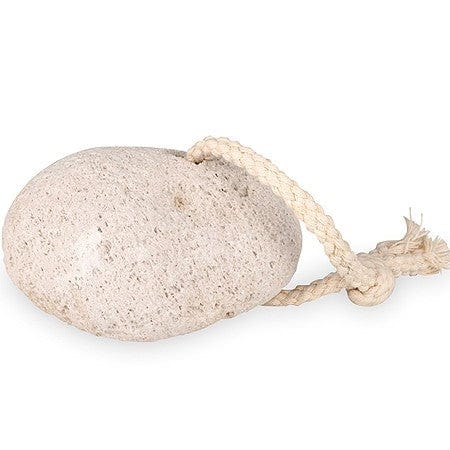
| Pumice stone | Heels, feet, elbows | Strong (targeted) | Porous volcanic stone buffs away thick, hardened skin | As needed on targeted areas |
| Dermaplaner | Face, removing peach fuzz and surface buildup | Moderate to strong | Blade gently scrapes away dead skin cells and fine hair from the skin’s surface | Occasionally (every few weeks, with care) |
Keep the pressure light. With exfoliation, gentler is often more effective over time.
3. Keep it gentle
Apply your exfoliant and softly massage into the skin using small, circular motions for around 30 seconds. There’s no need to scrub hard — in fact, that’s where irritation often begins.
Use lukewarm water and a gentle muslin cloth to rinse. Avoid hot water, as it can aggravate the skin.
Never exfoliate over broken skin, sunburn or irritation.
4. Always moisturise afterwards
Exfoliating can leave the skin slightly more vulnerable, so replenishing moisture is essential. A simple, natural moisturiser or facial serum will help restore hydration and support the skin barrier.

Which natural exfoliator is best for your skin type?
Which natural exfoliants suit sensitive skin?
FOR SENSITIVE SKIN
Gentle, calming ingredients are best.
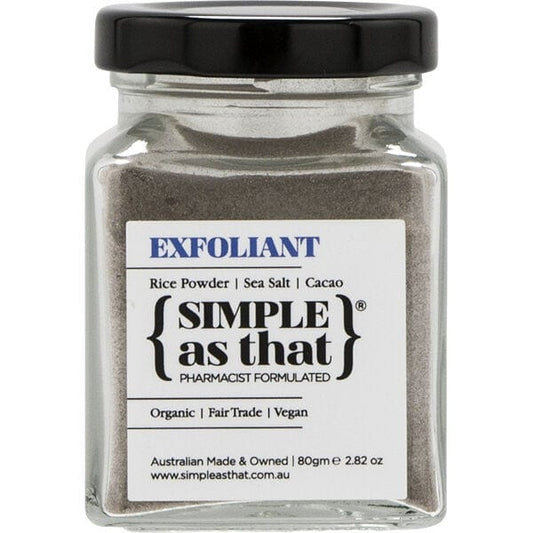
- Raw cacao: rich in antioxidants, helps soothe redness and nourish
- Honey: naturally antibacterial and calming for irritated skin
- Oatmeal: long used to relieve itching and inflammation
- Rosehip seed: rich in nutrients and well tolerated by people with eczema or sensitive skin
- Ground pumice: when finely milled, offers gentle exfoliation
Product approach: look for finely milled powders or cream-based exfoliants that don’t rely on aggressive scrubbing. Konjac sponges are also a super gentle way to exfoliate.


Which natural exfoliants suit dry skin?
FOR DRY SKIN
Dry skin benefits from exfoliants that both polish and replenish.
- Salt: rich in minerals that support skin renewal (best for body use)
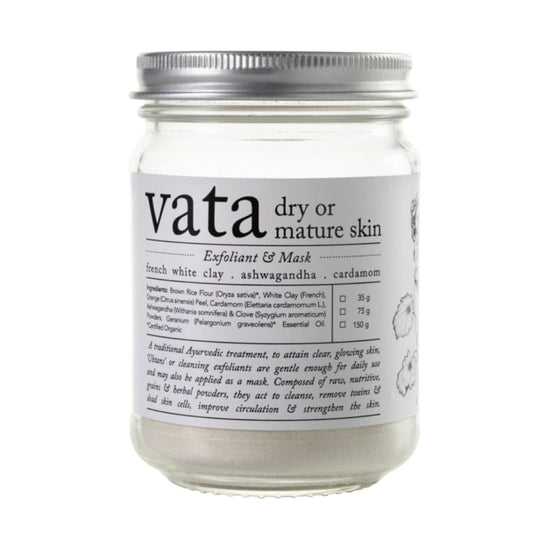
- French white clay: gently exfoliates without stripping oils
- Sugar: helps loosen dead skin while retaining moisture
A simple DIY approach of salt and a nourishing oil such as jojoba oil, can work beautifully for the body — just avoid using coarse scrubs on the face.
How can you exfoliate gently without scrubbing?
FOR A GENTLE, NON-SCRUB APPROACH
Not all exfoliation comes from scrubbing. Some of the gentlest forms don’t feel like exfoliation at all.
Clay masks are a good example. While they don’t contain any grit or texture, they still help to lift impurities, absorb excess oil and loosen the buildup of dead skin cells sitting on the surface.
As the clay dries and is rinsed away, it lightly exfoliates without friction — making it a good option for those who find scrubs too harsh or reactive.
- French white clay: particularly gentle and suitable for dry or sensitive skin
- Kaolin clay: soft and balancing, often used in delicate formulations
- Rhassoul clay: slightly more active, helpful for congested skin
Clay works differently to a scrub. Rather than relying on friction, it gently binds to excess oil and impurities while softening the layer of dead skin on the surface. As it’s rinsed away, this loosened buildup is lifted with it — offering a subtle form of exfoliation without the need for harsh particles.
Our picks:


Which natural exfoliants suit oily or congested skin?
FOR OILY OR CONGESTED SKIN
Here, the focus is on clearing pores while keeping balance.
- Bergamot oil: helps reduce inflammation and bacteria
- Lemon oil: supports oil regulation
- Fresh cucumber: cooling and mildly astringent, good for pimples and acne
- Ground coffee: stimulates circulation and gently exfoliates, brightens skin
- Coconut oil soap: helps dissolve excess oil and debris, softens blackheads and whiteheads, clears out your pores
Our picks:


Find your gentler way to exfoliate
From finely milled facial exfoliants to soft konjac sponges and body brushes, explore natural options to suit your skin and your routine.
Make your own exfoliator or choose a ready-made scrub?

There’s something satisfying about making your own scrub — and simple combinations like sugar and oil can be very effective.
At the same time, well-formulated natural exfoliants can offer a more balanced experience, especially for sensitive skin. The texture tends to be more refined, and the ingredients are combined in a way that supports the skin rather than overwhelming it.
It doesn’t have to be one or the other. Many people move between both.
Biome's Make Your Own Scrub Recipes
- Pumice & Clay Facial Exfoliant
- Deep Cleansing Face Mask with Bentonite Clay
- Coffee & Coconut Sugar Body Scrub
- Activated Charcoal Body Scrub
More inspiration on How to Make Your Own Clay Mask
FAQs: Common questions about exfoliating your skin naturally
Q: Does exfoliating unclog pores naturally?
A: Yes. Exfoliation removes dead skin cells that can trap oil and debris inside pores, helping to keep them clear. When done gently and regularly, it can reduce congestion and support more balanced, clearer-looking skin.
Q: Can exfoliating remove blackheads?
A: Yes, to an extent. Gentle exfoliation helps loosen the buildup of oil and dead skin that forms blackheads, making them less visible over time. It won’t remove them instantly, but it can help prevent and reduce them.
Q: What happens if you over-exfoliate your skin?
A: Over-exfoliation damages your skin barrier. This can lead to redness, dryness, sensitivity and breakouts. If your skin feels tight or reactive, it’s usually a sign to stop exfoliating and focus on gentle hydration.
Q: Is exfoliation good for sensitive or reactive skin?
A: Yes, if done gently. Sensitive skin benefits from mild exfoliants like oats, clay or finely milled powders used less frequently. Avoid harsh scrubs, as they can increase irritation rather than improve the skin.
Q: Can exfoliating cause breakouts?
A: Yes, if it’s too harsh or too frequent. Over-exfoliation can irritate the skin and disrupt its natural balance, which may lead to more breakouts. Gentle, less frequent exfoliation is usually more effective.