






Quick answer: Start with warm water and a protective shave soap, oil or cream. Check which direction your facial hair grows, then shave with the grain using short strokes, a shallow blade angle and almost no added pressure. For a closer result, re-lather and make a second pass across the grain. Take extra care around the upper lip, jawline and neck, where the contours and grain direction often change.
Shaving your face with a safety razor uses the same tool as shaving legs or underarms, but the technique is different. Facial skin is thinner, the terrain is more uneven, and hair on the face often grows in more than one direction across a small area. Here's how to get a comfortable, close shave without the nicks.
This guide focuses on face-shaving technique. For help building a protective lather, see how to use shaving soap, including application advice for the face, underarms and bikini line.
How do you shave your face with a safety razor?
Start with a mild razor.
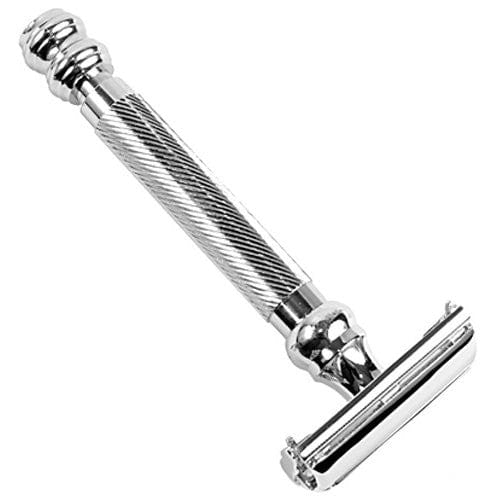
A mild or mild-to-medium head is more forgiving while you learn the curves of your jaw and neck. If you have not chosen one yet, read our guide to how to choose a safety razor.
Prepare with warm water.
Shave after a warm shower or hold a warm, damp cloth against your face. Warm water softens facial hair and helps reduce resistance as the blade moves across the skin.
Apply shave soap, oil or cream.
Cover the area with a layer that gives the blade slip and helps cushion the skin. Not sure which format to use? Compare shave soap vs shave oil vs shave cream.
Shave with the grain first.
Use short, controlled strokes and almost no added pressure. Keep the razor at a shallow angle and rinse the head regularly so hair and lather do not build up.
Re-lather before a second pass.
If you want a closer shave, apply fresh lather and shave across the grain. Wait until your skin and technique are comfortable before trying an against-the-grain pass.
How do you find the direction of facial hair growth?
Helpful tip: Check your grain direction after a day or two of growth and remember the pattern for future shaves.
Should you shave with or against the grain?
Begin with the grain. Shaving against facial hair growth on the first pass can increase the likelihood of razor burn, bumps and ingrown hairs, particularly around the neck.
First pass
Shave with the grain to remove most of the growth with less resistance.
Second pass
Re-lather, then shave across the grain if you want a closer finish.
Against the grain
Leave this until your skin is comfortable and your technique is consistent—and skip it if irritation persists.
How should you shave the upper lip, jawline and neck?
Upper lip and around the mouth
Use very short, controlled strokes. Gently stretch the skin with your free hand and take your time beneath the nose and around the corners of the mouth.
Jawline
Adjust the razor angle as the jaw curves. Work in small sections rather than trying to carry one long stroke from cheek to neck.
Neck
Slow down and follow the grain map closely. Neck hair often changes direction across a small area, and repeated passes over the same spot can contribute to irritation.
What should you do after shaving your face?

If shaving leaves your skin uncomfortable, read our guide to itchy skin after shaving for possible causes and gentler routine adjustments.
How do you know when to change a safety razor blade?
There is no single blade-change schedule that suits everyone. Facial hair thickness, the size of the area shaved, blade type, shaving frequency and how the blade is cared for can all affect its lifespan.
Change the blade when: it begins to tug, drag, skip or requires extra pressure to cut comfortably. A fresh blade should glide cleanly—do not compensate for a dull edge by pressing harder or repeatedly changing your technique.
Rinse the blade thoroughly and allow the razor to dry between uses. Hold replacement blades only by their short, blunt edges and place used blades in a secure disposal tin.
Ready for a more comfortable face shave?
Find reusable razors, replacement blades, shave soap and gentle after-shave care for your routine.
Face shaving with a safety razor FAQs
How often should you change a safety razor blade?
Replace the blade when it starts to tug, drag or feel less comfortable rather than relying only on a set number of shaves. Coarser hair, frequent shaving and larger shaving areas can dull a blade sooner.
Why does my neck become more irritated after shaving?
Neck hair commonly grows in several directions, while the curved surface makes it easy to repeat strokes or lose the ideal razor angle. Map the grain carefully, shave with it on the first pass and avoid pressing harder over difficult areas.
Is it better to shave your face before or after a shower?
Shaving after or near the end of a warm shower can make facial hair easier to cut. If you are not showering first, hold a warm, damp cloth against the beard area before applying your shaving product.
Can you use the same safety razor for your face and body?
Yes. Most safety razors can be used for both face and body hair. Rinse and clean the razor thoroughly between areas, use a fresh, comfortable blade and choose a handle and head design that you can control easily.
Related reads
Compare razor weight, handle length, head design and mild versus aggressive options before choosing your first reusable razor.
Learn how to load a shaving brush, build a creamy lather and apply shave soap to the face and body.
Shave soap vs shave oil vs shave cream
Compare lather, glide, longevity and ease of use to find the right natural shaving product for your routine.
Why does my skin feel itchy after shaving?
Explore common causes of post-shave discomfort and simple ways to make your shaving routine gentler on the skin.