





Originally published February 2024, updated September 2026.
Whether you’re washing everyday dishes, cleaning narrow bottles or tackling baked-on food, choosing a plastic-free dish brush helps reduce plastic waste and microplastic pollution. Here’s why the materials matter—and how to find the right natural fibre brush for each job.
Quick answer: A plastic-free dish brush is made from wood or bamboo with natural plant fibre bristles instead of plastic. Choose a long-handled brush for everyday dishes, a narrow bottle brush for drink bottles and jars, or a short, sturdy pot brush for baked-on food.
Looking beyond the brush? See our complete guide to washing dishes without plastic for soap bars, dish cloths, sponges and dishwasher powder.
Why choose a plastic-free dish brush?
Eco friendly, plastic-free dish brushes offer numerous benefits, both for the environment and your home.
Natural materials instead of plastic
Plastic-free dish brushes are made from materials such as bamboo, wood and natural plant-based fibres. By choosing these materials instead of plastic, you are helping to reduce plastic pollution and our reliance on non-renewable resources.
No plastic bristles washing down the drain
Plastic bristles gradually wear down with use, sending tiny plastic fragments down the drain and into our waterways. A dish brush made with plant fibre bristles avoids this source of microplastic pollution.
Durable and long lasting
A well-made natural dish brush can be used again and again. Some brushes also have replaceable heads, allowing you to keep the handle for much longer. Fewer replacements save money and minimise waste.
Hygienic and quick to dry
The open bristles of Wooden dish brushes have fewer places for food particles and moisture to become trapped than a dense sponge. They are easy to rinse and dry quickly when properly stored, making the brush less hospitable to bacteria. Choose a brush that can hang or stand without its bristles sitting in water, then allow it to dry completely between uses.
Compostable and recyclable parts
At the end of the brush’s useful life, separate its materials where possible. Untreated wood and natural plant fibre components may be composted, while metal wire should be removed and recycled where facilities accept it.
Which plastic-free dish brush is best for each job?
Different brush shapes and bristles suit different washing-up jobs. These are our favourite plastic-free choices for everyday dishes, bottles, pots and pans.

For everyday dishes
Features: Natural tampico bristle head, galvanised wire and an untreated beechwood handle.
Best for: Everyday plates, bowls, glasses, pots and pans. The long handle keeps your hands out of the washing-up water, while the replaceable head helps the wooden handle last much longer.
Made by hand in Germany using the traditional hand-threading technique, a craft that is increasingly being replaced by machines.
What you love: “I really love this brush. It’s just the right size, the little hook on the handle is useful for pulling the plug in the sink, the bristles are extremely scrubby but don’t scratch more delicate surfaces. I also get a great lifespan out of each brush head before replacing! Absolutely would recommend.” — Talara

For bottles and jars
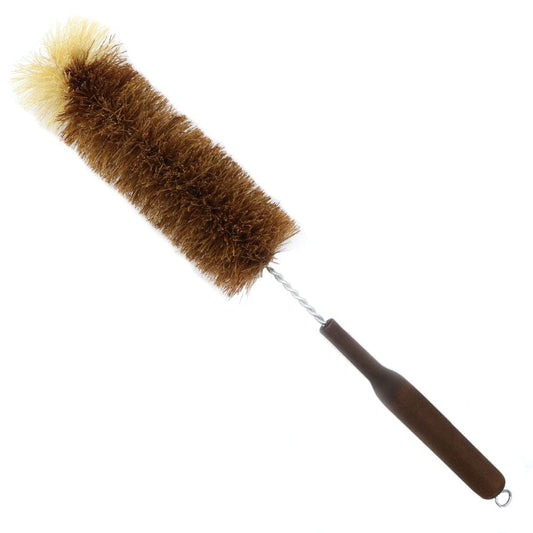
Features: Coconut fibre bristles, galvanised wire and a long handle made from sustainably sourced timber.
Best for: Reaching inside reusable drink bottles, jars, glasses and other narrow containers. The curved shape reaches into tricky edges, and the brush can hang or stand to dry between uses.
What you love: “This is the second Ecomax Premium Bottle Brush that I have bought. The first one lasted me 4 years. It’s strong and the bristles are designed to get into slim bottles and reach all the tricky spots.” — Gillian

For pots and tough food stains
Redecker Besser Pot Scrubbing Brush
Features: A sturdy beechwood handle with stiff natural union fibre bristles.
Best for: Scrubbing baked-on food from suitable pots and pans. Its short, rounded shape sits comfortably in your hand and gives you extra pressure where you need it.
Wet the brush, swirl it gently over a solid dishwashing soap and scrub as usual. For delicate or non-stick surfaces, always follow the cookware manufacturer’s care instructions and choose a softer brush where needed.

For fresh produce
Features: Natural bristles set into an untreated beechwood handle, with a firm side for root vegetables and a softer side for delicate produce. Handcrafted in Germany.
Best for: Thoroughly cleaning potatoes, carrots and other root vegetables, as well as softer fruits and vegetables that need a gentler brush.
What you love: “The Redecker vegetable brush is very handy and has both firm and soft bristles to suit the fruit or vegetables you need to clean.” — Julie

For an easy plastic-free setup
Biome Dishwash Block and Dish Brush Bundle
Features: The Biome Dishwash Soap Block paired with a sturdy wooden pot scrubbing brush.
Best for: Replacing bottled dishwashing liquid and a plastic brush in one simple set. Swirl the wet brush over the solid soap block, scrub your dishes and rinse as usual.
What you love: “Absolutely love this. The brush is so sturdy and well made, the dish soap is great. Love that I’ll never again have to throw away plastic dishwashing bottles.” — Jackson
How do you care for a natural dish brush?
A few simple habits will help your dish brush last longer:
- Rinse away food and soap after each use.
- Shake out excess water.
- Hang or stand the brush so air can circulate around the bristles.
- Do not leave the wooden handle or bristles sitting in water.
- Allow the brush to dry completely between uses.
- Replace the head rather than the whole brush when that option is available.
Find the right natural brush for every job
From everyday dishes and narrow bottles to pots that need a serious scrub, choose a sturdy brush made without plastic bristles.
Shop natural cleaning brushesFrequently asked questions about plastic-free dish brushes
Do dish brushes release microplastics?
Plastic dish brushes can release tiny fragments as their bristles gradually wear down. Choosing a brush with natural plant fibre bristles avoids this source of microplastic pollution.
What is the most non-toxic dish scrubber?
Look for a scrubber made from simple natural materials such as coconut fibre, untreated wood or plant fibre bristles, without plastic bristles or unnecessary coatings.
Are bamboo and wooden dish brushes safe?
Yes. Choose a well-made brush with natural plant fibre bristles, rinse it after use and allow it to dry completely between washes. Check your cookware’s care instructions before using stiff bristles on delicate or non-stick surfaces.
Which dish brush is best for tough food stains?
A short pot scrubbing brush with firm natural fibre bristles gives you more control and pressure for baked-on food. Use a softer brush for delicate cookware.
Which dish brush is best for bottles?
Choose a long, narrow brush with a curved or flexible head that can reach the base and edges of bottles, jars and glasses.
Related reads
How to Wash Dishes Without Plastic: A Complete Guide
Make the Switch to Reusable Dish Cloths
How Dishwashing Soap Bars Work