





We speak to lots of parents in our Biome stores and online who are worried about commonly used toxins harming their children. What’s surprising is not that these ingredients exist—but how normal it has become to use them on babies every day.
Many products marketed as “gentle” or “for sensitive skin” still contain petrochemicals and synthetic chemicals linked to irritation, hormone disruption, or long-term health concerns.
We tend to assume that if something is sold for babies, it must be safe. Unfortunately, in Australia, NZ and the USA, manufacturers are allowed to use thousands of chemicals in personal care products that have never been tested for safety—on the basis that they are considered safe until proven otherwise.
In contrast, the European Union has banned more than 1,300 chemicals from personal care products. In the USA, only 11 have been banned in the past 40 years.
As always, our approach is not alarm, but to help you make informed choices that are best for the needs of you and your family.
The products to question first
If a product goes on your baby's skin multiple times a day, it matters what’s in it.
Focus on:
- wipes
- creams
- washes
- powders
These are where hidden ingredients like fragrance, petroleum and harsh detergents show up most often—despite being marketed as gentle.
1. Synthetic Fragrance (Hidden in Baby Wipes, Wash & Skincare)
Synthetic fragrance is one of the least transparent ingredients in personal care.
Listed simply as “fragrance” or “parfum”, it can contain hundreds of undisclosed chemicals, including phthalates. Phthalates are used to stabilise scent and have been identified as endocrine disruptors, meaning they can interfere with the body’s hormonal system.
Research has linked phthalate exposure to:
- asthma and respiratory issues
- developmental and behavioural effects
- reproductive system disruption
Fragrance is also a common trigger for:
- skin irritation
- eczema flare-ups
- headaches and sensitivities
Where it shows up
- Baby wipes (one of the highest exposure products)
- Baby wash and shampoo
- Lotions, oils and creams
Baby wipes are particularly concerning because they are used multiple times a day and often left on the skin. Learn more here about what disposable baby wipes are made of
A better approach
- Choose fragrance-free products
- Choose reusable baby wipes
- Look for minimal, transparent formulations

gentle, fragrance-free wash

reusable cotton wipes
2. Petroleum-Based Ingredients (Common in Nappy Creams & Baby Oils)
Many conventional nappy rash creams rely on petroleum-derived ingredients like mineral oil and petrolatum to create a barrier on the skin.
To be clear, mineral oil is a by-product of refining crude oil to make petrol.
These ingredients form an impenetrable layer on the skin. While this can block moisture, it also:
- prevents the skin from breathing
- interferes with natural skin function
- offers no nutritional benefit to the skin
Petroleum and mineral oil can’t be metabolised by the body.
Where it shows up
- Nappy rash creams
- Baby oils
- Some moisturisers
A better approach
- Use products that create a breathable barrier (e.g. beeswax)
- Choose plant oils that actively support skin health


“0% added parabens, phthalates and dyes”
but no mention of petrochemicals 🤷
⚠️ What’s really in “baby oil”?
Johnson’s Baby Oil is marketed as “mild and gentle”—but the ingredients tell a different story:
Mineral Oil, Fragrance
Mineral oil is a by-product of refining crude oil to make petrol. It forms a film on the skin that locks in moisture—but also blocks the skin from breathing or functioning naturally.
Fragrance is a catch-all term that can hide a mixture of undisclosed chemicals.
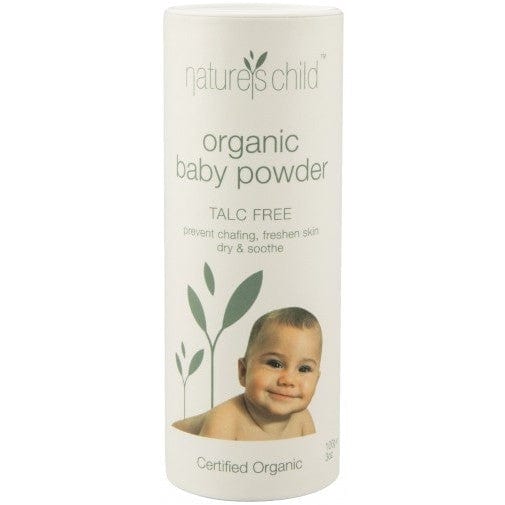
3. Talc in Baby Powder
Talc has been used in baby powder for generations—but concerns around its safety have been widely reported.
Talc deposits are often found near asbestos, and contamination has been at the centre of multiple legal cases. In the United States, jury verdicts have linked long-term talc use to serious health outcomes.
Even where contamination is not present, talc is an ultra-fine particulate that can be inhaled, particularly during application.
Where it shows up
- Baby powder
- Some cosmetic powders
A better approach
- Kaolin clay
- Cornstarch
- Tapioca starch
These alternatives absorb moisture effectively and are widely used for sensitive skin without the same concerns.


4. Harsh Detergents (SLS & PEGs in Baby Wash)
Many baby washes and shampoos use synthetic detergents to create foam and a “clean” feeling.
Two of the most common are:
Sodium Lauryl Sulphate (SLS)
Used in over 90% of personal care products, SLS is known to be:
- a skin irritant
- a lung and eye irritant
- capable of interacting with other chemicals to form nitrosamines (a class of carcinogens)
PEGs (Polyethylene Glycols)
PEGs are petroleum-based compounds used as emulsifiers. They are often contaminated with 1,4-dioxane, a known carcinogen. While 1,4-dioxane is not listed on labels, it can be present as a by-product of manufacturing.
Where they show up
- Baby wash
- Shampoo
- Bubble bath
A better approach
- Soap-free or low-foam cleansers
- Products made from saponified plant oils
- Simple formulations without sulphates or PEGs
These cleanse effectively without stripping the skin or disrupting its natural barrier.

gentle baby soap bar

traditional castile wash
A note on plastics in baby products
It’s not just what goes on your baby’s skin.
Plastics used in baby bottles, soothers and toys may contain chemicals such as BPA and PVC. While BPA has become widely recognised, it is often replaced with other plastics that may not be any safer.
PVC, in particular, is one of the most environmentally damaging plastics and has been restricted or banned in many countries.
Where possible, choose alternatives such as these to reduce exposure:
- stainless steel
- glass
- natural rubber
- wood
Why this matters
Babies are not just small adults.
Their skin is thinner, more absorbent, and still developing. Their detoxification systems are also immature, meaning they may be less able to process and eliminate chemical exposures.
When products are used multiple times a day—like wipes, creams and washes—the exposure adds up.
This isn’t about eliminating every risk. It’s about reducing the most unnecessary ones.
Building a safer routine
Start with what you use most often: wipes, creams, washes, powder. These are the products with the highest frequency and the greatest impact.
At Biome, we’ve spent over 20 years helping families navigate these choices. Every product is selected based on both ingredient safety and real-world performance—because it has to work as well as it protects.
If you're building your wider routine — including baby lotion, nappies, and newborn skin care essentials — you might find our ultimate non-toxic baby essentials checklist helpful.
Article first published in September 2022 and updated in March 2026.
FAQs
Are baby wipes safe for newborns?
They can be—but frequent use makes ingredient choice important. Fragrance-free, minimal formulations are generally the safest option.
What ingredients are most important to avoid?
Synthetic fragrance, sulphates, petroleum derivatives, talc and certain preservatives are among the most commonly raised concerns.
Is “natural” always better?
Not always—but simpler formulations with fewer synthetic additives are less likely to irritate sensitive skin.
Related reads
Watched The Plastic Detox documentary? Here's What To Do Next.
The Ultimate Non-Toxic Baby Essentials Guide
Best Baby Wash for Sensitive Skin
Nappy Rash Worries? CastorBub Is Here For Your Baby’s Delicate Skin
Barrier Creams Explained: From Baby Bottoms to Beauty Counters
Natural Methods to Clean and Disinfect Children's Toys