





Take a quick look at the cooking utensils in your kitchen drawer. There is probably a plastic spoon or spatula that has been there for years, still doing its job, but now scratched, stained or slightly melted around the edges.
Those marks are easy to dismiss as normal wear and tear, but research shows that older, worn plastic kitchenware can shed more microplastic particles into food. So, which utensils should you replace first, and what should you use instead?
QUICK ANSWER
What utensils are safe to use instead of plastic?
Choose solid, untreated wood for non-stick and coated cookware, and food-grade stainless steel for stainless steel, iron and other uncoated pans. These materials will not melt or shed plastic into your food.
What are the best non-toxic kitchen utensils in Australia?
The best non-toxic kitchen utensils are made from solid, untreated natural wood or high-grade stainless steel — materials with nothing synthetic, no coatings and nothing that can leach or shed into your food.
✓ Choose
FSC-certified beechwood
Renewable, biodegradable timber that can be left completely untreated, so there is nothing to leach into food. It is naturally non-reactive, gentle on non-stick cookware and will break down at the end of its life rather than sitting in landfill. Biome’s Redecker utensils contain no plastic coatings, varnishes or synthetic sealants.
304-grade stainless steel
An inert, non-reactive material widely used for food preparation. It is durable, corrosion-resistant, heat-resistant, dishwasher safe and fully recyclable. Best suited to spatulas, ladles and spoons used with stainless steel, iron and other uncoated cookware.
✕ Cooking utensil materials to avoid
Plastic and nylon
Can release microplastic particles during food preparation, particularly when worn, scratched or heat damaged.
Black plastic
Some products have been found to contain flame-retardant chemicals, most likely because contaminated electronic plastic entered the recycling stream. There is no way to look at a black plastic utensil and know what recycled material it contains.
Low-quality silicone
Silicone quality varies. Platinum-grade silicone is relatively stable, but cheaper products may contain fillers and release siloxanes when heated. It is more heat-stable than plastic, but remains synthetic, non-biodegradable and not genuinely plastic-free like wood or stainless steel.
Teak
A functional, non-toxic wood, but we deliberately do not stock it. Teak supply chains in Southeast Asia are linked to illegal logging and rainforest destruction, and sustainable sourcing can be difficult to verify. FSC-certified beechwood offers the same natural-material benefits without the risk to old-growth forest.
Do plastic cooking utensils shed microplastics?
Yes — and more than you'd think. A 2024 study in Science of the Total Environment found that cooking with plastic utensils and cookware added an estimated 2,400–5,000 microplastic particles per year into home-cooked food. Non-plastic tools, tested the same way, added zero.
The worst offenders aren't new utensils — they're the old favourites. A separate 2024 review found that older, visibly worn plastic utensils shed more than newer ones, identified by staining, heat damage, and scratches. So that reliable plastic spoon you've had for ten years, the one that's survived a decade of stir-fries? It's very likely the biggest source of microplastic in your kitchen.
The simplest sign to remember: if a plastic utensil looks worn, scratched or heat damaged, it's shedding plastic into your food every time you use it.
Is it safe to cook with plastic spoons?
Occasional use of an undamaged plastic spoon isn't going to cause obvious harm. But heat is the trigger that makes plastic shed the most — research has found that near-boiling temperatures dramatically accelerate microplastic release, and stirring a hot pan is about as close to a worst-case scenario as a kitchen utensil gets.
This is still an active area of research — a January 2026 scientific review is looking specifically at how these everyday kitchen exposures may affect health. The science isn't finished, but the direction it's pointing is consistent: heat + plastic + food = more particles ending up on your plate. Given how easy the fix is, there's little reason to wait for the final word.
Are melted or heat-damaged plastic utensils toxic?
If a plastic utensil has visibly melted, warped, or discoloured against a hot pan, that's your sign to retire it — it's almost certainly shedding material and breakdown by-products into your food at that point.
But here's the part most people miss: you don't need to see damage for it to be happening. Studies show particle release starts well before melting becomes visible to the eye. "It hasn't melted" isn't the same as "it's not shedding anything" — it just means the damage isn't obvious yet.
Replace a plastic cooking utensil if it is:
- melted or warped
- deeply scratched
- rough or fraying around the edges
- permanently stained or yellowed
- cracked, brittle or flaking
You do not need to throw away every plastic item in your kitchen overnight. Start with utensils that are visibly damaged or regularly used around heat. Sound plastic items that are not exposed to heat can be replaced gradually as they wear out.
What should you use instead of plastic cooking utensils?
You do not need a drawer full of specialised tools. One wooden spoon, one wooden spatula and a small stainless steel set will cover most everyday cooking. The right material simply depends on the cookware you use.
| Material | Best used with | Heat resistance | Plastic-free? |
|---|---|---|---|
| Untreated wood | Non-stick, enamelled and coated cookware | Good | ✓ Yes |
| 304-grade stainless steel | Stainless steel, iron and other uncoated cookware | Excellent | ✓ Yes |
| Silicone | Coated cookware, if good quality and undamaged | Varies by quality | ✕ No |
| Plastic or nylon | Not preferred around heat | Limited | ✕ No |
Tip: Use untreated wood with non-stick, enamelled and coated cookware. Stainless steel can scratch coated surfaces, so reserve it for stainless steel, iron and other durable uncoated pans.
Our plastic-free utensil picks
These three tools cover most stirring, turning, scraping, serving and ladling without plastic handles or synthetic coatings.
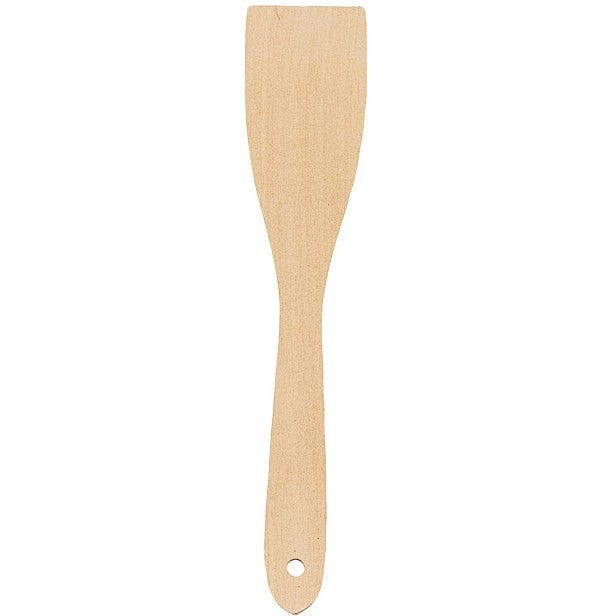

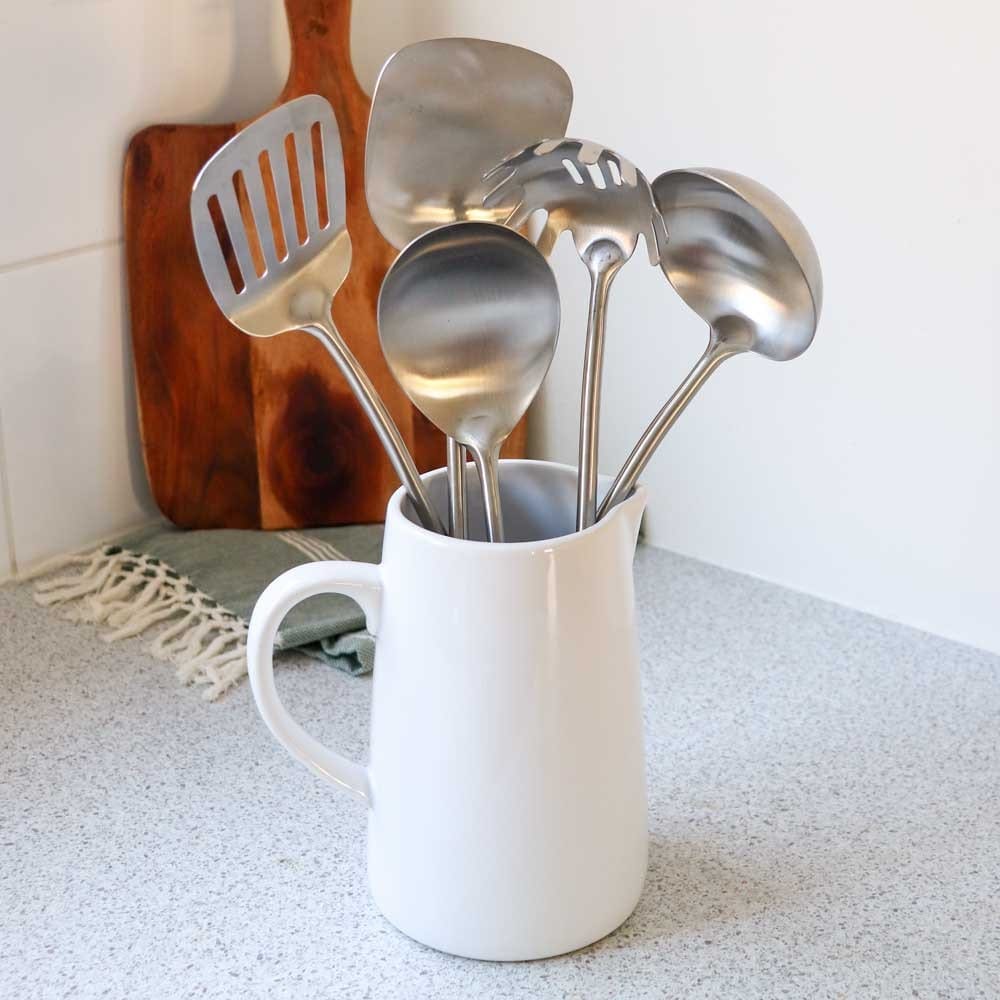
Wooden vs silicone kitchen utensils: which is better?
Silicone gets marketed as "the safe alternative to plastic," so it's worth being precise here: silicone is a step up from plastic, but it isn't plastic-free. It's a petrochemical product — made from silica combined with petroleum-based compounds. It behaves very differently to plastic (more heat-stable, doesn't shed microplastic fragments the same way), but it's still synthetic, not natural.
Wood, such as FSC-certified beechwood, is renewable and biodegradable. When it is left untreated, it also contains no plastic coating, artificial colour or synthetic non-stick surface.
For someone looking for a genuinely plastic-free cooking utensil, untreated wood is our preferred choice.
Is silicone safer than plastic for cooking?
Generally, yes. Good-quality silicone is more heat-stable and is not linked to the same microplastic-shedding concerns as conventional plastic. However, silicone quality and formulation can vary. Platinum-grade silicone is relatively stable, while cheaper products may contain fillers or release siloxanes when heated.
“Safer than plastic” and “plastic-free” are also two different claims. Silicone is still synthetic, non-biodegradable and difficult to recycle, so it does not offer the same natural-material benefits as untreated wood or the durability and recyclability of stainless steel.
If you already own good-quality silicone utensils that remain in good condition, there is no need to throw them away simply to buy something new. Continue using them while they remain undamaged. When they eventually need replacing, choose untreated wood for coated cookware or stainless steel for durable, uncoated pans.
Other plastic-free kitchen swaps to consider
Cooking utensils are a good place to begin, but other plastic surfaces are also regularly cut, scratched or exposed to heat. Look next at the items you use most often.


The plastic utensils already in your kitchen aren't a hypothetical future problem — the wear you can see on them is a sign that the material is breaking down. Start with anything scratched, melted or regularly exposed to heat, then replace it with untreated wood or stainless steel as it wears out.
Ready to replace worn plastic in your kitchen?
Discover untreated wooden spoons and spatulas, durable stainless steel utensils and other practical tools chosen for a long-lasting, plastic-free kitchen.
Frequently asked questions
Are nylon cooking utensils plastic?
Yes. Nylon is a type of synthetic plastic. Although nylon utensils may be marketed as heat-resistant, they can still become scratched, worn or melted and are not a plastic-free choice.
Are bamboo cooking utensils a good alternative to plastic?
A utensil carved from one solid piece of untreated bamboo can be a practical plastic-free option. However, some bamboo utensils and kitchen products are made from fibres combined with glues, resins or melamine. Check how the product has been constructed rather than relying on the word “bamboo” alone.
Are wooden cooking utensils hygienic?
Yes, provided they are washed properly and allowed to dry completely. Do not leave wooden utensils soaking in water, and replace them if they develop deep cracks or splits that can no longer be cleaned properly.