





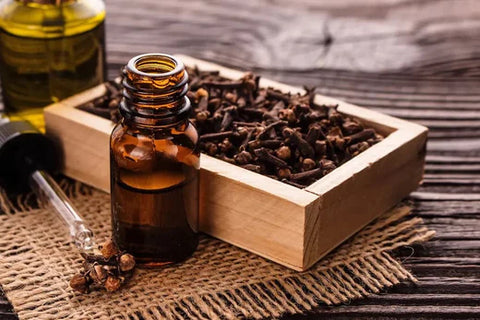
During the wet summer months, high humidity and heavy rains can lead to mould in any areas of your home that are affected by moisture. A popular natural cleaning products remedy for this is clove oil. But before you get to work mixing up your own clove oil solution, here are six things to know.
1. Why clove oil works to kill mould
One of the main reasons oil of clove is a popular mould remover is that it actually kills the spores, rather than just bleaching and hiding them. If you only bleach the mould, all the health risks (including allergies and asthma problems) will still be there whether you can see the mould or not, and it is likely to grow back in a few days.
2. Safety first
Similar to other essential oils, it's important to follow the safety instructions when using clove oil. Although it's natural and eco friendly, it can still cause skin irritations and some people may have an allergic reaction.
Keep clove oil away from children and those on blood thinning medication shouldn't use it.
3. Avoid touching mould
Inhaling mould spores can be dangerous, especially for those that suffer from asthma, so wear gloves and a mask when cleaning it and avoid handling mouldy items directly.
4. Get the right mix
Cleaning expert and co-author of Spotless, Shannon Lush, recommends oil of clove for cleaning mould from hard surfaces. Shannon suggests:
First clean the surfaces with a mixture of 4 litres of hot water, 1 tablespoon bicarb of soda and half a cup of vinegar.
Then, mix a quarter teaspoon of clove oil per litre of water, put it in a spray bottle, lightly mist on mouldy surface. Leave for 20 minutes and wipe off. Spray again and leave. It will take between 24-48 hours for the mould spores to dry and drop off.
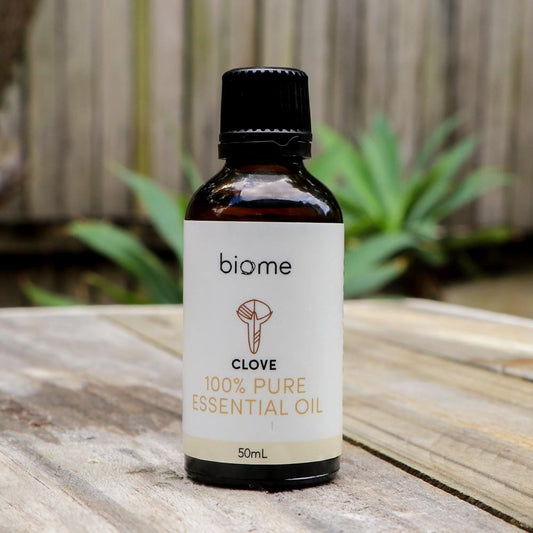
The clove oil we use for this recipe is Biome 100% pure clove bud oil

5. Turn to chalk
To counter mould in homes, put a few drops of pure clove oil on jumbo sticks of blackboard chalk, then place or hang them in cupboards around the house and allow the scent to waft around killing mould spores. Add a few more drops of oil every month or so once the scent has disappeared. This avoids spraying any more moisture in an already moist house.
6. Get to the source
While clove oil has been long recommended for killing mould spores, Nicole Bijlsma, naturopath and IICRC accredited mould remediation technician, says it's important to focus on the cause of the mould growth, which is moisture.
Regardless of whether you use clove oil to kill mould, it is still important to address the root cause of the moisture such as excessive condensation, inadequate ventilation, inappropriate drainage, plumbing or roof leaks, flooding or high humidity.
To rid mould from hard surfaces, she recommends an 80% white vinegar to 20% water mix with a microfibre cloth which is either discarded after use or rinsed twice (in two separate buckets - one with 50:50 white vinegar to water ratio and the other with just clean water) to prevent re-contamination.
Any remaining discolouration on surfaces can be removed with Oxygen Bleach.
Ready to tackle mould the natural way?
If you want a natural, effective way to get rid of mould for good, Biome's 100% Pure Clove Bud Essential Oil is exactly what you need for the recipe above.
Rich in eugenol, it kills mould spores at the source rather than just bleaching the surface — mix ¼ teaspoon with 1 litre of water for a simple, natural DIY mould spray.
Shop Biome Clove Essential Oil
✔ 100% pure clove bud oil ✔ Generous 50ml bottle ✔ Lasts a year or more
Common questions about clove oil
Is Oil of Cloves the same as Clove Oil?
Yes, "oil of cloves" and "clove oil" refer to the same essential oil, extracted from the flower buds of the clove tree (Syzygium aromaticum). The naming difference is just regional and generational; "oil of cloves" is the older, more traditional term and still shows up often in pharmacies and older cleaning guides, while "clove oil" is the more common modern label.
One distinction worth knowing: clove oil can be steam-distilled from the bud, leaf, or stem of the plant, and these aren't identical. Clove bud oil has the highest eugenol concentration, which is the compound responsible for its antifungal action, so it's the one to look for specifically for mould removal. Clove leaf and stem oils are cheaper and more commonly used in fragrance blends, but contain less eugenol and are less effective for this purpose.
What's a natural mould remover alternative to clove oil?
Clove oil isn't the only natural option, and depending on what you're treating, another approach, or combination, may suit better:
- Vinegar (white vinegar, undiluted or close to it) is mildly acidic and works well as a first-pass clean on hard, non-porous surfaces, though it doesn't have the same spore-penetrating action as clove oil.
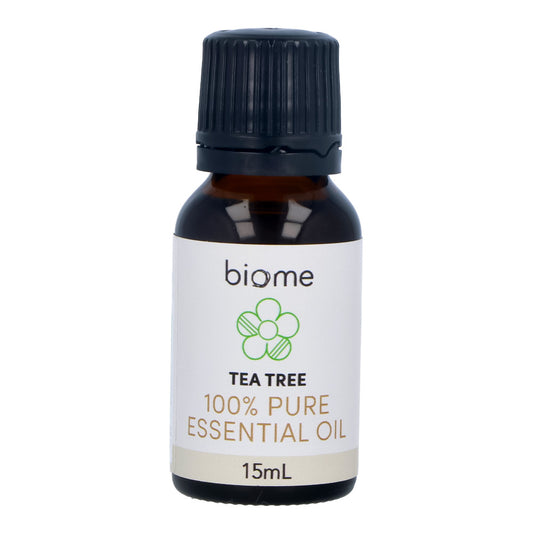
- Tea tree oil has good general antibacterial and antifungal properties and a milder scent than clove oil, making it a reasonable option for light, surface-level mould or general bathroom maintenance.
- Clove oil remains the stronger choice for established or recurring mould, since eugenol specifically targets and breaks down mould spores rather than just cleaning the visible surface.
Some people use vinegar to clean first, then follow with a clove oil spray for longer-term spore control — the two aren't mutually exclusive.
Where can I buy clove oil for mould? (Bunnings, Woolworths, Coles)
Clove oil isn't a standard stock item at Bunnings, Woolworths, or Coles — these retailers typically carry commercial mould sprays (usually bleach-based) rather than pure essential oils. For clove oil specifically, you'll generally find it at:
- Health food stores and pharmacies
- Online retailers specialising in natural or eco cleaning products, like Biome
- Some independent hardware stores with a natural cleaning range
Whichever retailer you choose, check the label for 100% pure, therapeutic-grade clove oil rather than a diluted or fragrance-blended version — the latter won't have the same eugenol concentration and is unlikely to work as well for mould.
Shop more natural cleaning products
Related reads
How To Get Rid of Mould, Mildew and Moisture
How To Make Your Own Natural Mould & Mildew Cleaner
How To Use Oxygen Bleach for Cleaning
10 Ways To Use Muslin Cloths Around the Home including tying up cloves in muslin